
A-League time limits cover different actions: a five-second countdown for delayed throw-ins and goal kicks, eight seconds of goalkeeper hand control, and ten seconds for a substituted player to leave. Each has its own trigger and consequence. This guide explains the 2026/27 procedures for A-League Men and Women, checked against the current APL announcement and full IFAB texts as at 1 November 2026.
Three clocks govern three different moments in a match
The A-Leagues' time limits are easier to follow if you first identify the action being timed. Five seconds concerns a referee's countdown for a delayed throw-in or goal kick. Eight seconds concerns a goalkeeper controlling the ball with the hands. Ten seconds concerns a player leaving the field when substituted. They are not three versions of a single stopwatch.
APL's 2026/27 rules announcement confirms the restart and substitution procedures for both A-League Men and Ninja A-League Women. It also notes that the goalkeeper hand-control limit was already in use the previous season. Calling all three brand-new trials would obscure their different histories and status.
The consequences differ too. A delayed throw-in can pass to the opponents; an overdue goal kick can become their corner. Exceeding the hand-control limit also gives the opponents a corner, but from a different starting situation. A slow substitution instead leaves the replacement waiting outside while play resumes. Recognising the outcome helps explain why a referee points towards the corner rather than simply adding more stoppage time.
A raised hand showing the last five seconds is not enough to identify the rule. With a goalkeeper holding the ball, it is the visible end of an eight-second allowance. At a delayed restart, it is the five-second countdown itself. During a substitution, the referee may show the final five seconds of the outgoing player's ten-second departure period. The action around the signal supplies its meaning.
For a team, these limits put a practical cost on delaying the next phase: losing possession, defending a corner or restarting short of an outfielder. That gives supporters a more useful way to read an incident than counting every dead-ball second from the stands. The key questions are when the relevant procedure began and what the player was required to do before it ended.
Five seconds: a referee's countdown for delayed restarts
A throw-in does not automatically expire five seconds after the ball crosses the touchline. The IFAB countdown protocol is activated when the referee determines that the team taking a throw-in or goal kick is deliberately delaying it. The referee starts the procedure, rather than every spectator running an independent clock from the moment the ball goes out.
The referee can first tell the player to hurry, but that preliminary warning is not required. To begin the count, the referee whistles, signals clearly for the restart and visibly counts down with a raised hand. A verbal countdown may accompany the signal. The visible process gives the team a defined opportunity to get the ball back into play.
The count can begin before a player picks up the ball
Waiting to touch the ball is not a reliable way around the rule. The protocol explicitly allows the referee to start without a player possessing it. Deliberately slow retrieval, adopting an incorrect throw-in position or placing the ball incorrectly for a goal kick can all be relevant. A player cannot guarantee unlimited preparation simply by leaving an available ball on the ground.
Imagine a player walking slowly past the available ball while teammates organise a long throw. If the referee identifies deliberate delay, the countdown can begin before the thrower lifts the ball. This is a hypothetical illustration, not a finding against any particular A-League player. It explains why watching only the time the ball spends in the thrower's hands can miss the important part of an incident.
A long throw remains a legitimate attacking option. The change places a limit on deliberate delay, rather than banning the technique or allowing a separate preparation allowance for it. A team seeking an attacking throw still needs to respond to the referee's signal. The protocol does not provide an automatic exemption just because that team is behind on the scoreboard.
A throw-in changes hands; a delayed goal kick becomes a corner
If the ball is not in play when the count expires, the opponents receive the restart. For a throw-in, they take it from the same position as the original throw. For a goal kick, they receive a corner on the side closest to where the goal kick was to be taken. That can turn a routine defensive restart into a set piece the delaying team must defend.
The relevant action must actually restart play. Under Law 15, a thrown ball enters play when it enters the field; under Law 16, a goal kick enters play when kicked and clearly moving. The kick need not travel outside the penalty area. A defender taking a goal kick is also subject to the procedure; it is not exclusively a goalkeeper rule.
There are two further safeguards against an over-literal reading. The protocol says not to penalise a player who is in the process of throwing or kicking as the count ends. It also does not impose an automatic yellow card for that initial overrun: a caution applies if the player or a teammate then excessively delays the opponents' restart. Losing the restart and being cautioned are distinct consequences, not an inseparable pair.
Eight seconds: controlling the ball with the hands
A goalkeeper catching a cross is a different situation from a goalkeeper preparing a goal kick. After the catch, the ball is already in play and the goalkeeper's control with the hands or arms is governed by the eight-second limit. The five-second delayed-restart procedure is not the rule to apply to that period of possession.
Under Law 12.3, controlling the ball with the hands or arms inside the goalkeeper's penalty area for more than eight seconds results in a corner to the opponents. The referee decides when control begins and visibly counts down the last five seconds. The raised hand marks the final part of the allowance, rather than the beginning of a fresh eight seconds.
The corner is taken on the side nearest the goalkeeper's position when penalised, as set out in Law 17. Compare that with a delayed goal kick, where the corner side relates to where the goal kick was to be taken. Both offences can end in a corner, but the referee has timed different actions.
What starts and ends the goalkeeper's hand control?
Control is broader than standing still with the ball in two hands. The definition includes holding it between the hands or arms, or between a hand or arm and a surface such as the ground or the goalkeeper's own body. Holding it on an outstretched open hand also counts. So do bouncing it or tossing it into the air.
For example, a goalkeeper who secures the ball, gets up, walks forwards and bounces it has not obtained a new eight-second allowance at each stage. Those movements can all form part of the same period of hand control. Starting your count only when the goalkeeper stands upright can therefore underestimate the period the referee is measuring.
The starting point is the referee's judgement of control, not automatically the first instant the ball touches a glove. A loose ball following a save is not the same visual situation as a ball secured against the body. For viewers trying to understand a decision, identify when control was established and look for the referee's signal, rather than treating every contact during a save as the start of identical possession.
An opponent cannot challenge the goalkeeper while that hand control exists. The time limit does not invite an attacker to knock the ball away or obstruct its release. Once the goalkeeper releases it, the next phase is subject to the other Laws: this rule is neither an eight-second limit on ordinary possession with the feet nor permission to pick the ball up again whenever convenient.
For a team building from the back, the practical question is how quickly passing options appear after the goalkeeper gains control. Teammates waiting until the visible countdown is almost finished can leave a rushed distribution choice. That is a tactical reading of the constraint, rather than evidence that a particular long kick or turnover was caused by the rule.
Ten seconds: leaving the pitch when substituted
The substitution limit measures the departing player's exit, not how long the replacement has been warming up. Its purpose is to prevent a substitution becoming an extended pause while the outgoing player walks across the pitch. If the departure takes too long, the consequence can fall on the team because the replacement must wait outside.
The departure signal and the exceptions
The full substitution protocol starts the ten seconds when the board is shown, or when the referee signals the substitution where no board is used. If the referee checks the substitute's equipment at halfway, the count instead starts when that inspection is completed and the referee signals the change. The player normally leaves at the nearest boundary point unless directed otherwise.
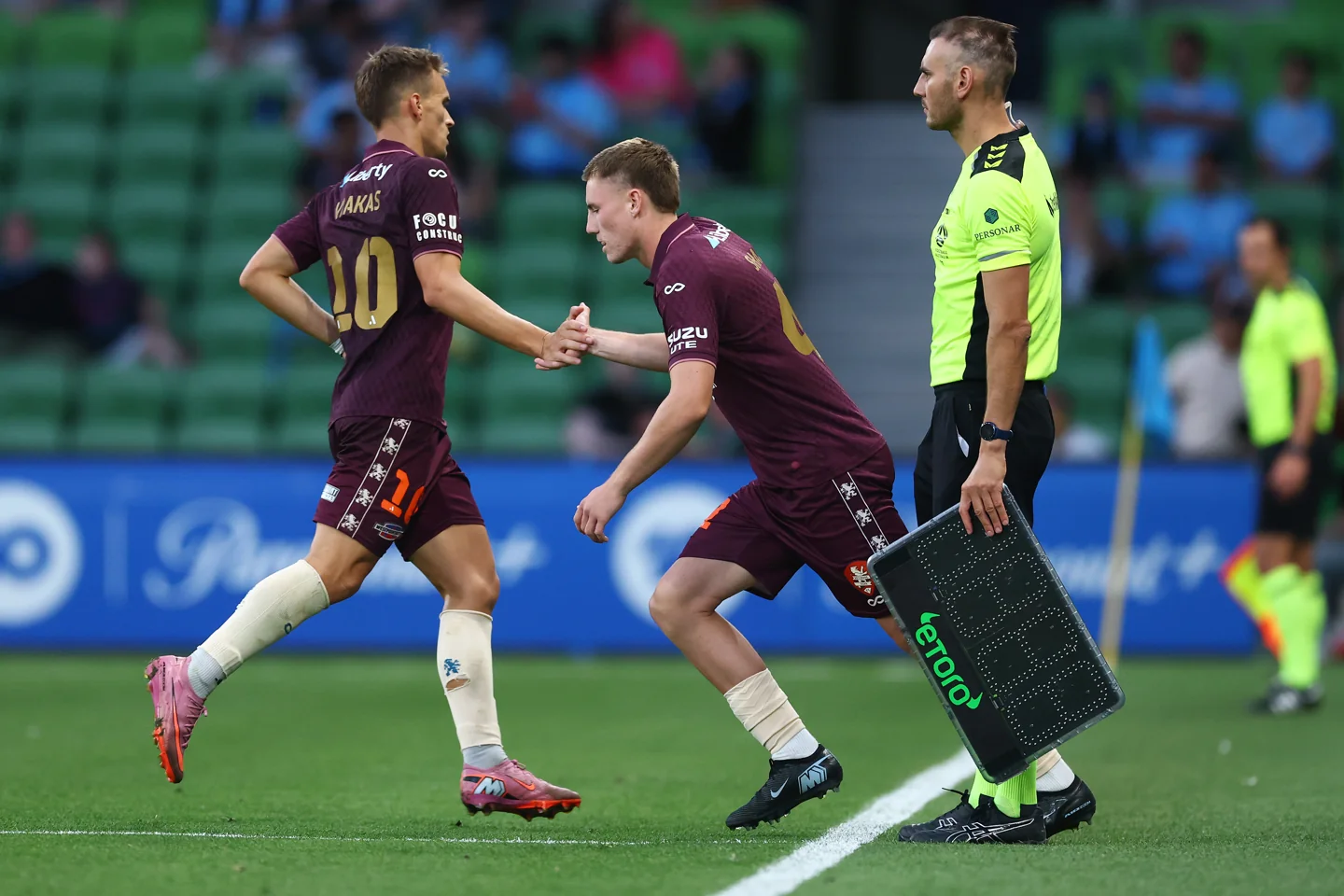
For several substitutions during the same stoppage, all outgoing players must be off within ten seconds of the final substitution being indicated. Boards or signals must not be deliberately delayed between those changes. That avoids treating a group of replacements as a series of unrelated opportunities to prolong the stoppage.
The referee can decide not to apply the limit where an injury clearly prevents the player leaving in time, or where safety or security prevents the normal nearest-point exit. The protocol also says a replacement should be allowed on if the departing player is very close to, or crossing, the boundary as the countdown ends. This is a measure against delay, not a demand to punish the last step of a prompt exit.
A yellow card is not automatic at the first instant beyond ten seconds. Where the replacement is kept off, the departing player is cautioned only if the delay is excessive. That distinction allows the team consequence to operate without treating every overrun as an identical disciplinary offence.
A late departure can keep the replacement off beyond a minute
If the limit is exceeded, the outgoing player still leaves as quickly as possible, but the substitute cannot enter immediately. Play restarts. The substitution cannot then be cancelled or the chosen replacement changed. The team cannot resolve the consequence simply by abandoning that substitution and selecting a different player.
The replacement may enter at the first stoppage after a full minute has elapsed following the restart, and only after the referee's signal. That minute uses a running clock. It is therefore misleading to describe the consequence as an automatic entry exactly 60 seconds later: the next eligible stoppage may come later.
Take an independent hypothetical example. Play restarts at 70:15, so the minute ends at 71:15. A stoppage at 71:05 is too early. If play continues and the first subsequent stoppage is at 71:42, that is the eligible opportunity for entry with the referee's signal. The replacement has waited 87 seconds from the restart. The extra 27 seconds arise from waiting for that stoppage, not from a second penalty invented by the referee.
This differs from the outfielder returning under the goalkeeper-injury trial, who can be permitted back while the ball is live once the relevant minute is complete. Seeing a player waiting beyond a minute is therefore not enough to judge an error. Establish whether the player is a delayed substitute or a returning outfielder, then apply the correct entry condition.
How to judge consistency without confusing the clocks
Supporters have good reasons to care about consistent enforcement. In the public discussion of the July law-change announcement, contributors questioned how long throws would be affected and whether teams could shift their delay to collecting the ball. Other replies pointed to the referee's ability to begin the count before possession. The discussion contains competing expectations, not evidence that either outcome has already occurred across the league.
The useful comparison is between matching procedures. If one goalkeeper receives a visible five-count while holding a live ball and another while preparing a goal kick, the referees are applying different clocks. Measuring both from the moment a goalkeeper appears on screen cannot establish that one team received a longer allowance. The first question is what action was being timed.
For a delayed throw-in, identify the whistle and raised-hand countdown and consider any delay in collecting or positioning the ball. For hand control, identify when the referee judges the goalkeeper to have secured it. For a substitution, establish the board or relevant signal and whether an injury or safety issue affected the exit. Those are different observations; reducing them all to “the referee waited too long” loses the reason for the decision.
Discretion does not make consistency irrelevant. Supporters can reasonably question why an apparently similar delay prompted a countdown in one incident but not another. A useful comparison includes the whole sequence and the applicable safeguards, rather than only a clip of the final gesture. It also separates disagreement with the rule's design from an allegation that the referee deliberately favoured a side.
The football effects will depend on how teams adapt. Throw-in takers may need teammates ready earlier; goalkeepers may need passing options before the last-five signal; outgoing players need a prompt route to the nearest permitted exit. These are practical responses to the rules, rather than a forecast that all time-wasting will disappear. Assessing whether matches become more fluent requires evidence beyond an isolated turnover or a handful of online comments.
For the next A-League Men match or Ninja A-League Women match you follow, watch the restart and the referee together. Distinguishing the trigger, signal and consequence makes the clock easier to understand—and makes a specific enforcement question easier to explain.
Join the conversation
Have a question or a matchday tip to share? Keep it friendly and on topic. Comments appear after review.
No comments yet. Start the conversation.
Sign in with Google to leave a comment.