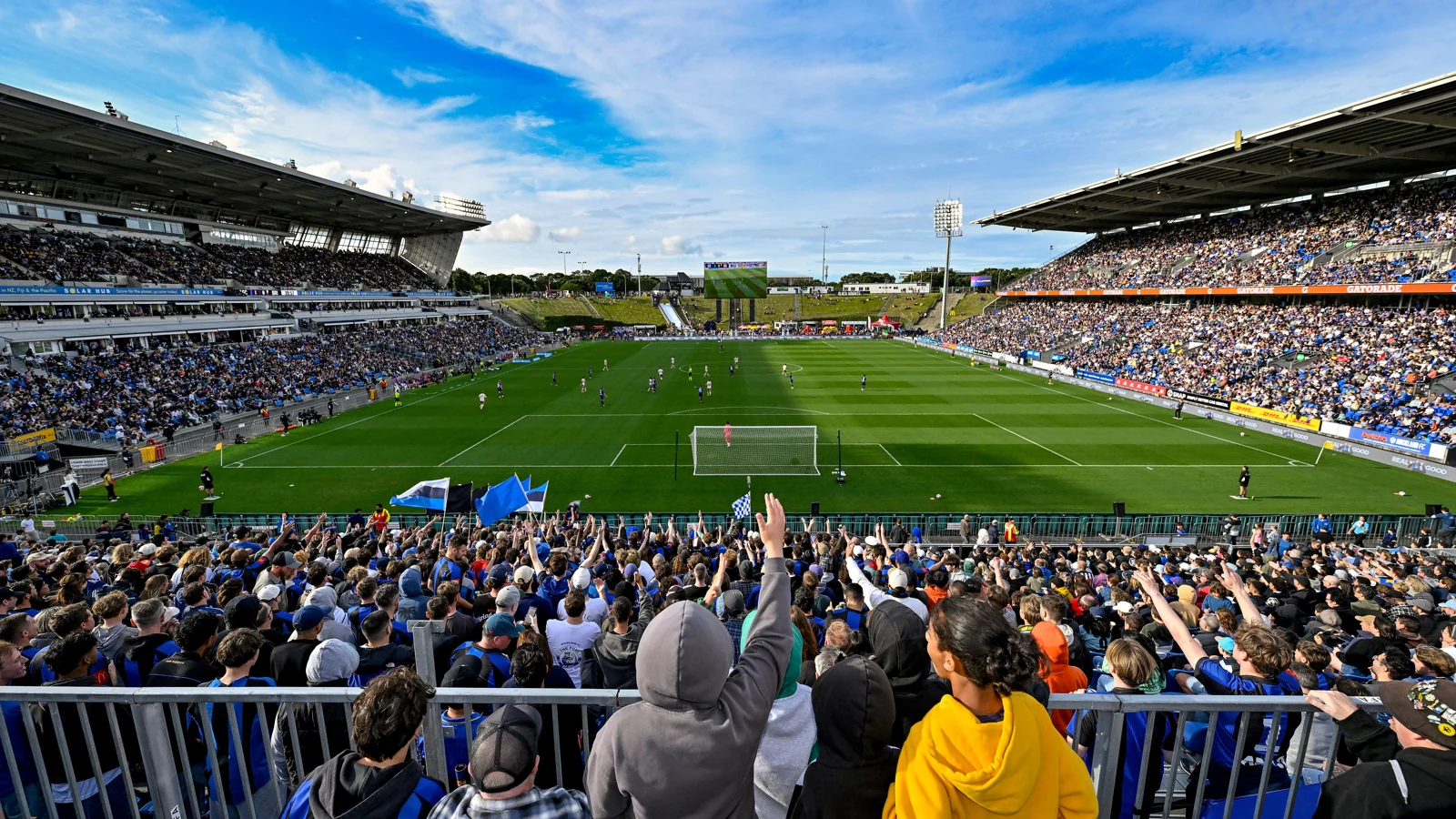
Kick-off times across Australia
Auckland FC host Wellington Phoenix at Go Media Stadium on Saturday 7 November 2026, with kick-off scheduled for 5pm in Auckland. For viewers in Sydney, Melbourne, Canberra and Hobart, that means 3pm AEDT. It is an afternoon derby for Australian audiences, even though the New Zealand promotion advertises a late-afternoon start.
The club's next-home-game listing and the stadium's event page both identify 5pm as kick-off. These are the corresponding times on the same Saturday:
| Location | Kick-off, 7 November |
|---|---|
| Auckland and Wellington | 5pm NZDT |
| Sydney, Melbourne, Canberra and Hobart | 3pm AEDT |
| Brisbane | 2pm AEST |
| Adelaide | 2:30pm ACDT |
| Darwin | 1:30pm ACST |
| Perth | Noon AWST |
The distinction between AEST and AEDT matters here. Queensland stays on standard time while New South Wales, Victoria, the ACT and Tasmania use daylight saving. Adelaide and Darwin also differ by an hour on this date. A blanket “3pm Australian time” would therefore send several groups of supporters to the wrong starting time.
These conversions use the match date and the relevant time zones, anchored to Auckland's 5pm NZDT start, which is 04:00 UTC. They are not a fixed two-hour subtraction for every Australian city. If you share the fixture with friends in another state, include the city or the timezone abbreviation rather than forwarding the Auckland poster without an explanation.
Kick-off is also separate from the start of television coverage and the time the stadium opens. The venue has confirmed the football start but says fuller event timings will be confirmed closer to the match. Arriving at the ground at 5pm is consequently a different proposition from being ready to watch the first whistle at home. Use the eventual gate-opening advice to plan entry, and the broadcaster's listing to decide when to switch on.
For anyone following the derby between other Saturday commitments, set the match reminder in the location where you will actually be watching. Travelling from Australia to Auckland changes both your local clock and the viewing arrangements you need; selecting an Auckland timezone in a fixture tool does not itself give access to a New Zealand broadcaster.
Where to watch in Australia and New Zealand
For an Australian viewer who wants a confirmed route to the whole match, Paramount+ is the starting point. Its Australian rights cover every A-League Men match live. The fact that both teams are New Zealand clubs does not move an Australian audience into New Zealand's television agreement.
The Australian listing is the one to check
Free coverage needs a separate check. The new Paramount and Network 10 agreement provides one men's free-to-air match per week. That does not mean every Saturday fixture, or every derby, is available free. Some general club and season guides still describe two Saturday matches, a statement that conflicts with the new agreement.
The league's current Australian viewing page directs supporters to local listings for the selected Network 10 and 10 Streaming games. As of this guide's 1 November check, we have not independently confirmed this derby as a free selection. Plan around the verified Paramount+ route, then check the particular fixture in our A-League TV schedule and the broadcaster's guide before Saturday.
For a viewing party, make that check before inviting people for a particular channel. A free highlights clip after the match is different from a live stream, while a programme's start time can precede the actual kick-off. Our watching guide explains the services; the time table above gives the start of play in your state.
New Zealand coverage has separate rights
In New Zealand, the Phoenix's viewing information identifies Sky as the local rights holder, with all matches on Sky Sport and selected games on free-to-air Sky Open. The league also identifies Sky Sport Now and Sky Go as streaming routes within that arrangement. A selected free game is a narrower promise than every game being free.
Australian supporters travelling to Auckland should therefore organise access for where they will actually watch. Someone staying at a hotel can ask whether its sports package includes the relevant Sky channel; someone meeting friends should establish the live option beforehand. Neither an Australian Paramount+ listing nor a general reference to Sky Open establishes the exact channel available in a particular New Zealand room.
Why the derby record matters without deciding this match
Auckland enter the season's first derby with six wins from six meetings and a combined 20–4 score. That is substantial evidence of how the rivalry has developed, rather than a claim based on one dramatic afternoon. It also explains the confidence behind Auckland's election-themed promotion, built around head coach Pedro Moreira.
One detail is easy to misread. In the club's 28 October announcement, chief executive Nick Becker's reference to making it 7–0 concerns the sequence of derby wins. It is not an official forecast of a seven-goal scoreline on Saturday. The campaign is a ticket promotion with a pointed sporting joke, rather than team news or a neutral assessment of Wellington.
The most recent meeting, in February, finished 5–0 to Auckland in Wellington. The Phoenix's own match report describes a match that changed sharply after the opening own goal: Wellington were four down by half-time, and coach Giancarlo Italiano announced his resignation afterwards. That makes the result an important historical marker. It does not make the players, management or selection circumstances from that afternoon a reliable description of November.
For Wellington, the useful challenge is to prevent one setback becoming a run of damaging minutes. Losing possession or conceding first will happen in football; the next defensive action and the quality of the next spell with the ball will reveal more than the promotional noise. A controlled response would itself be a departure from the way February unravelled, even before the final result is known.
For Auckland, six previous wins create an expectation to manage. The home side still have to build attacks, protect against transitions and earn this game's chances. A supporter can respect the historical advantage while watching for evidence that the present team is imposing itself. The record supplies the stakes; it cannot supply Saturday's performance in advance.
The football questions before this meeting
The latest results make this a more interesting contest than the historical record alone suggests. Auckland have just followed a heavy away defeat with a point at Brisbane; Wellington arrive after a third successive win. These are early-season snapshots, but the way those results were earned gives supporters something specific to watch.
Can Auckland turn its recent results into a steadier performance?
In the 1–1 draw at Brisbane on 30 October, Hiroki Sakai scored in the 11th minute before Tom Aldred equalised in the 95th. Auckland's report records 31.2 per cent possession, one shot on target and 12 corners conceded. Those figures help explain why defending the advantage became such a long assignment.
That followed a 5–2 defeat at Western Sydney in which Auckland also led. The Wanderers scored just before half-time and twice soon after it, then added two late goals after Auckland had recovered to 3–2. The concern across these two games is how Auckland control the periods surrounding a change in the score.
Against Wellington, watch whether Auckland can keep enough possession and attacking threat to move the game away from their own penalty area. That does not require dominating every possession statistic. An effective outlet, a well-timed supporting run or a calmer spell after a turnover can reduce the number of consecutive defensive actions. Conversely, a home side committing players forward needs to protect the space behind them. This is a football question for Saturday, rather than a prediction of Moreira's formation.
What Wellington brings from its latest match
Wellington's 3–0 victory at Newcastle on 31 October was emphatic on the scoreboard but hard-earned in the play. Corban Piper opened the scoring, Henry Gray made important saves, and the defence produced interventions that kept the lead intact. Riley Bidois and Nathan Walker then scored late after coming off the bench.
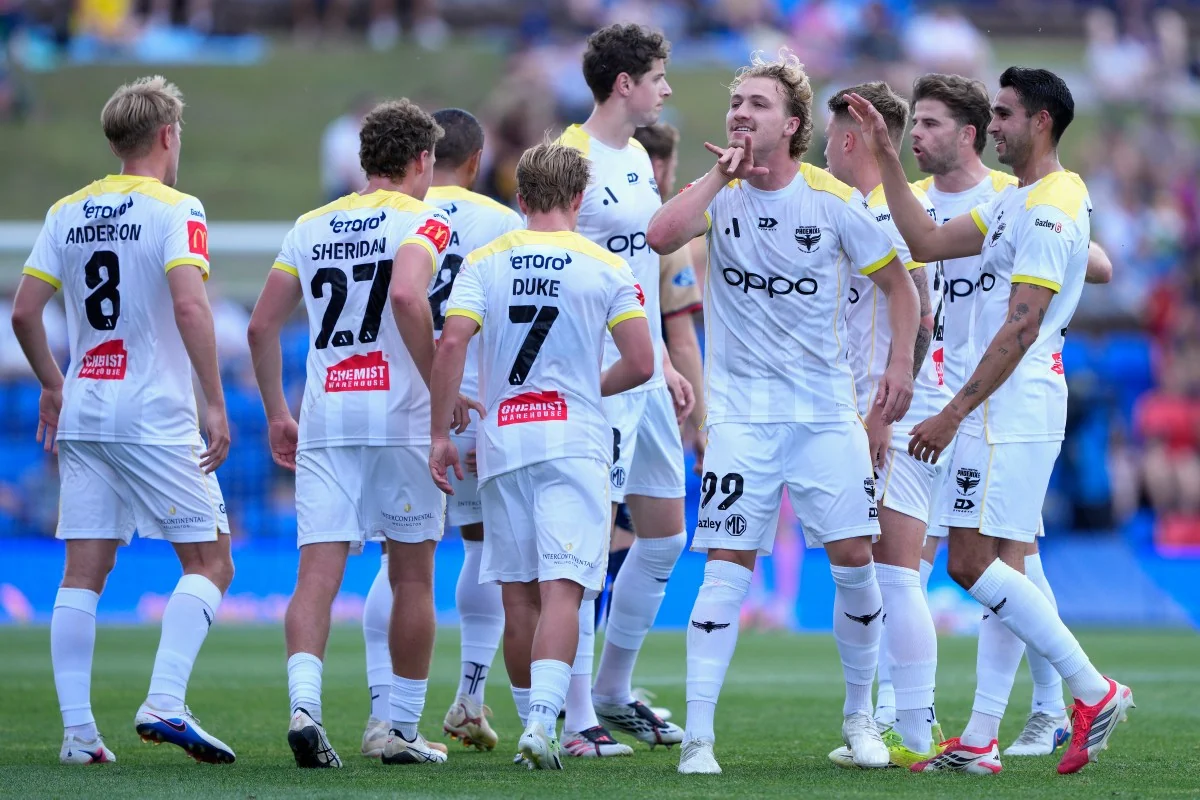
Kazuki Nagasawa supplied all three assists. His passing and the runners beyond him are therefore a useful combination to follow if Auckland push up the pitch. Chris Greenacre's own account acknowledged the pressure his side had absorbed and the importance of being clinical in transition. A three-goal win should not be mistaken for a match without difficult defensive stretches.
The substitutes matter too. Wellington's win at Newcastle showed how fresh attackers can convert a narrow lead into a comfortable final margin. For viewers, that makes the closing stages worth watching even if the derby remains tight for an hour. For Auckland, it raises a practical challenge: attacking for a winner while retaining enough structure to deal with Wellington's late running.
The timing of Wellington's goals is particularly instructive. Bidois scored in the 87th minute and Walker in added time, so the eventual 3–0 score conceals how long the visitors were defending a single-goal advantage. Auckland were also protecting a one-goal lead deep into their match, with a very different outcome. The comparison is about the final stages of two specific games, rather than a claim that one club always manages them better. A team can absorb pressure successfully, but it still needs an escape route when it wins the ball. On Saturday, watch whether those first passes after a recovery create a genuine break or simply invite the next attack.
Going to Go Media Stadium
The practical attraction for a visitor is an afternoon match with bus and train travel included in the match ticket. The two decisions to make together are where to sit and how to reach that part of the ground. Sorting those out before leaving the city is more useful than relying on finding parking beside the stadium.
The Upper South Stand offer is a specific ticket option
Auckland's derby promotion advertises NZ$20 Upper South Stand tickets. The club describes limited numbers. It is a particular stand offer, rather than a statement that every seat costs NZ$20, and the announcement does not establish how many remain when you book. Follow its official purchase link and examine the available category and final checkout total.
The venue's event information identifies Ticketmaster as the official ticket agent. It also says general on-site parking is unavailable, while mobility parking has a separate, limited booking process. If accessibility affects your choice of seat or transport, organise those arrangements together rather than treating a standard ticket as a parking reservation.
Go Media Stadium is predominantly uncovered. A raincoat or poncho is a useful matchday item if the forecast is wet; umbrellas cannot be opened while seated. The gate printed on the ticket is the one to use. Those small preparations matter when a group is arriving from different directions, especially if some members need extra time reaching their seats.
Match tickets and public transport
Auckland Transport's specific derby guide gives the included bus and train travel window as 1.30pm until the end of daily services on Saturday. Keep the match ticket accessible for the outward and return journeys. This is a useful saving for an Australian visitor, but it is worth checking each leg rather than assuming every mode is included.
Ferries still attract standard fares. A supporter arriving at the Downtown Ferry Terminal can connect to a bus or train, but the ferry component does not become free because the final destination is the football. Similarly, the included travel arrangement does not mean every rail section will be operating normally.
AT lists a South City line closure between Pukekohe and Puhinui, with replacement buses between Manukau and Pukekohe. Trains continue between the city and Puhinui. Anyone travelling from further south should allow for that interchange and use the event-day journey planner, rather than copying an ordinary-weekend travel time.
AT allows roughly 20 minutes to walk from Penrose station to the stadium. Some buses also follow detours after 3.30pm because of road closures. Build the walking section into the trip, arrange a meeting point near the correct gate, and check the return service before heading inside. That leaves the final approach to the ground for enjoying the derby atmosphere rather than working out a replacement route.
The final checks before Saturday
This guide reflects the information available on 1 November. Put the fixture into your A-League calendar in your own time zone, then decide whether Saturday means a screen in Australia or a seat in Auckland. The same 5pm New Zealand kick-off produces quite different afternoon plans in Perth, Adelaide and Sydney.
If you are attending, start with the actual ticket and its entry gate, then run the outward and return journeys through AT's event planner. Leave room for the walk from Penrose and any rail replacement connection. The stadium says fuller event timings will be confirmed closer to the match, so use its announcement for gate opening rather than treating the included transport window as an arrival instruction.
If you are watching remotely, establish the service and the local start time before the day. Check the official team announcements as the match approaches. The line-ups printed in last weekend's reports are evidence of those games, not an announced derby eleven.
Once play begins, the most revealing contest may be Auckland's ability to sustain pressure against Wellington's capacity to break quickly. Watch Nagasawa's passing options, the protection behind Auckland's attacks and how each side responds to the first major setback. Those details will tell you whether this meeting is following the old derby pattern or starting to change it.
Join the conversation
Have a question or a matchday tip to share? Keep it friendly and on topic. Comments appear after review.
No comments yet. Start the conversation.
Sign in with Google to leave a comment.