
Western United's participation agreement was terminated
Western United are absent from the 2026/27 A-League Men and A-League Women competitions following the Australian Professional Leagues' announcement on 10 August 2026 that the club's participation agreement had been terminated. Their absence is a competition-entry decision affecting both senior teams, rather than a bye, a postponed opening match or a change in the television schedule.
The APL's announcement said the club had breached several obligations under the agreement, including compliance with Football Australia's National Club Licensing Regulations. Chair Stephen Conroy described the financial, governance and legal matters the club had been working through during its earlier conditional hibernation.
That wording matters for anyone returning to the league after a season away. Western United had already missed 2025/26 under a conditional arrangement. News from that period often discussed a possible return. The August 2026 decision was a further development: the participation agreement itself was terminated ahead of the new campaign.
It also explains why searching for the team can produce apparently incompatible answers. A historical match page, a statement about rebuilding and the current fixture list can all refer to Western United while describing different things. The date and the issuing organisation determine whether a page records past football, a club aspiration or an actual competition decision.
The result for this season is straightforward: there are no Western United senior A-League fixtures to wait for. The wider questions concern how the situation developed, what happened to the local project and what evidence a future return would require. Those questions deserve attention without reducing the club's identity and supporters to a missing row in a fixture table.
How conditional hibernation became a different decision
The most useful way to understand the news is to keep the two seasons separate. The first decision gave the league a way to proceed while Western United attempted to resolve its position. The later decision ended the agreement through which the club participated.
The 2025/26 pause left a conditional path
On 6 September 2025, the APL announced conditional hibernation for both senior teams. Its statement described unresolved legal and regulatory proceedings and the difficulty of preparing for a season without clarity. It also said the club intended to continue its academy.
A possible return from 2026/27 was expressly conditional on legal, APL and Football Australia requirements. The reference to that season was a rebuilding objective within a conditional arrangement. It was not a confirmed fixture commitment or a promise that the passage of twelve months would restore the club's place.
The same announcement said players would be released to seek other employment while the transfer window remained open. That is an important sporting consequence. A dormant senior team is not simply an intact matchday squad waiting for its next scheduled round. Players and staff have careers to continue, and any attempted return must deal with the practical work of building an operating football team.
The August 2026 announcement ended that agreement
The August decision arrived after the period in which those matters were supposed to be addressed. The APL said it had remained in consultation with the club, then confirmed termination of the participation agreement. It did not announce another routine season-long pause with an automatic place reserved for the following year.
This is why an older article about a potential 2026/27 comeback can be accurate as a record of expectations at the time and unhelpful as a current schedule guide. Read its publication date alongside the later decision. A statement made before the outcome cannot be used to reverse the outcome once it has been announced.
For supporters, the change is more consequential than a missed opening weekend. The original rebuilding window and the current participation position are different stages of the story. Understanding that sequence allows a future proposal to be assessed on its own evidence, rather than assuming the old conditional route is still operating unchanged.
Why a settled debt did not guarantee league entry
A positive financial headline could reasonably have encouraged supporters. In its 9 January statement, Western United said proceedings had been dismissed following settlement of outstanding Australian Taxation Office matters. The club described that as an opportunity to rebuild and work towards a return.
But resolving a particular matter and satisfying the requirements for a professional season are different achievements. The January announcement concerned that settlement and the club's intentions at that point. It did not itself award a National Club Licence or confirm entry to the next A-Leagues campaign.
Licensing and league participation are separate questions
Football Australia's 19 May determination notice said its First Instance Body had assessed licensing for 2026/27 on 14 May. It confirmed that the current A-Leagues teams, except Western United, had satisfied the mandatory criteria. Western United's response acknowledged the determination and said it was reviewing available pathways, including appeal rights.
The 2026 National Club Licensing Regulations describe five categories of criteria: sporting, infrastructure, personnel and administration, legal, and financial. Clause 3.5 requires the relevant criteria to be fulfilled within the licensing deadlines. The framework therefore examines more than whether one debt has been paid.
That breadth has a practical football purpose. A professional club needs the people, facilities and operating arrangements to complete a season, alongside a sustainable financial position. A ground and a playing history do not, on their own, establish that the organisation meets every current requirement. Equally, the existence of five categories does not mean Western United was publicly found to have failed all five; the announcements do not give that detailed finding.
The APL's subsequent termination concerns the separate participation agreement. Reading the Football Australia licensing notice and the APL announcement together explains the sequence without collapsing them into a single generic reference to a licence. One concerns the regulatory licensing assessment; the other concerns the agreement for taking part in the league.
When evaluating future news, ask what the reported development actually achieves. A settlement can remove an obstacle. An investor can propose funding. A licensing decision can address eligibility. Confirmation of league participation addresses another question again. Clear attribution makes genuine progress easier to recognise, while preventing a single encouraging announcement from being mistaken for the complete return.
What the absence means for the men's and women's schedules
Both competitions have moved into 2026/27 without Western United, but their formats are not identical. It is useful to establish which competition you are reading before interpreting the number of clubs, the number of matches or a weekend without a fixture.
The two competitions have different club totals
The men's competition has twelve clubs. Its official season announcement provides for 26 matches per club across 28 matchweeks, including two split matchweeks. With eleven opponents, a full home-and-away set produces 22 games; the remaining four are additional third meetings.
The women's competition has eleven clubs and a different calculation. The official women's season guide specifies 20 regular-season matches across 22 matchweeks, with two byes per team. Ten opponents, played home and away, produce those 20 games. An odd number of clubs means somebody can legitimately have a bye while others play.
That women's bye is part of the current eleven-team draw. It is not a placeholder for a pending Western United fixture. Likewise, the men's split matchweeks should not be read as evidence that an extra team is about to be inserted. The published formats describe the competitions actually taking place.
Reading a fixture list without Western United
Use the current season's men's club list or women's schedule when looking for a match to attend. Western United's absence is different from a participating club having its game moved to another date. Waiting for the next matchweek, changing a broadcast filter or searching another city will not reveal a hidden senior league fixture.
Historical results still have a legitimate place. They record completed matches and the club's sporting achievements. A search engine can surface those pages beside newer news, so check the season as well as the opponent and venue before using a result as a travel plan.
The season format guide helps explain the current men's matchweeks and breaks. For Western United, however, the important update would come before an individual fixture: an official change in participation status. A calendar is the final practical expression of entry to a competition, not a substitute for the decision that allows entry.
What happened to the stadium and local football plans
Western United's story has always extended beyond a senior team sheet. The project involved a local football identity, a development pathway and a venue in Melbourne's west. The current positions of those elements need to be understood separately, because the disappearance of senior league fixtures does not make every question about the site or community disappear.
The venue agreement is another part of the story
Wyndham City announced on 11 August that it had terminated the stadium precinct development agreement with Western Melbourne Group. The council referred to an earlier default notice and a failure to rectify the issues. It also stated that the land, including Ironbark Fields, belonged to the council.
The council's current project page says the Ironbark Fields lease was also terminated in August. It describes the council taking responsibility for maintenance and completing outstanding works and service connections to prepare the facility for reactivation. Future plans for the site are council decisions.
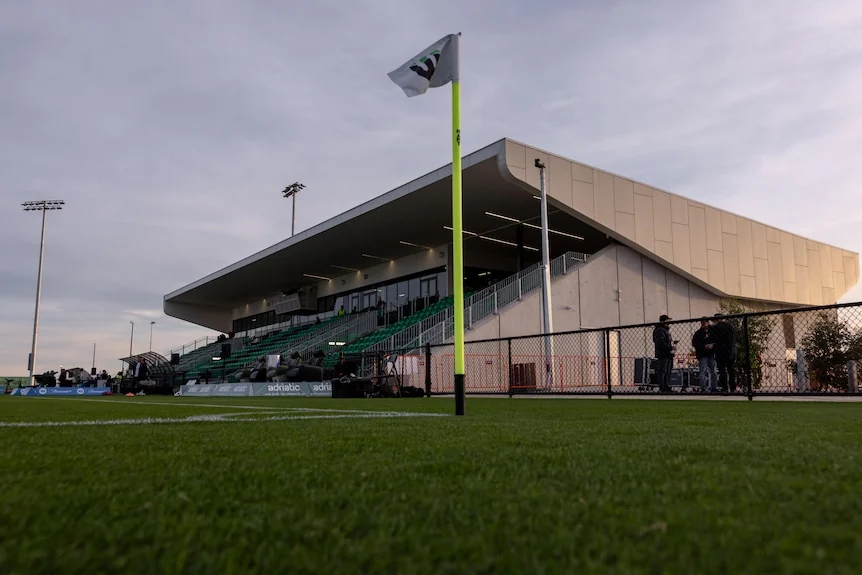
That leaves a real sporting asset with its own future to determine. A venue reactivation announcement would concern use of the facility; it would not by itself restore Western United's participation agreement. Similarly, the ended development arrangement and the existing ground are different aspects of the project. Following both prevents a construction or maintenance update from being read as a senior league fixture announcement.
A pathway for the west remains the sporting concern
In its 24 June statement, the club emphasised its academy, the families involved and the need for a credible ownership model. These were priorities expressed during the rebuilding effort. They explain why the issue matters to people whose involvement goes beyond attending the men's or women's first-team matches.
A later decision materially changed the competitive pathway. In its 12 August update, Football Victoria confirmed Western United's immediate withdrawal from all FV competitions after the Federal Court ordered WMG Football Club Limited to be wound up in insolvency. This was a separate state competition decision, with consequences for players beyond the senior A-Leagues squads.
FV said results would be removed from the relevant VPL and Advanced Junior Boys competitions, with byes replacing Western United in the remaining fixtures. It also said affected players could not register with another club for the final weeks of the 2026 season. For those players, the interruption was immediate and practical, rather than merely uncertainty about a distant professional opportunity.
The announcement said resulting 2027 vacancies would be handled through the applicable competition rules and order-of-merit processes. That concerns places in Victoria's football pyramid, rather than an allocation of an A-Leagues participation agreement. The different competitions have their own decisions and consequences.
A future development programme would therefore need current, concrete arrangements: coaching, training access, competition eligibility and an achievable next step. Families should judge a new offer on those details. The club's earlier commitment explains its ambition, while FV's later decision establishes what happened to its 2026 competition participation.
What would make a return more than an ambition?
Western United's 10 August response set an objective of working towards a return for 2027/28 under new ownership. That is the club's stated target. It is not an announcement from the APL that a place has been approved for that season.
A meaningful update would identify what has actually changed: who is responsible for the proposed organisation, which licensing requirements have been satisfied, what the league has formally approved and which competition and season that approval covers. Venue access and a viable football operation would also need concrete arrangements. An announcement addressing one of those matters can be progress without completing all the others.
This does not require supporters to dismiss every rebuilding effort. It provides a way to distinguish the stages. A proposal is assessed as a proposal; an official determination is assessed as a determination; published fixtures eventually allow people to plan attendance. The evidence becomes stronger as it moves from aspiration to confirmed operating arrangements and competition approval.
The personal response is a separate matter. In an October r/Aleague discussion about Western United supporters, participants described different ways of remaining involved, including following the league without adopting another club. These are individual responses, rather than a representative survey. A former supporter does not have to make the same choice as everybody else to retain a meaningful connection with football.
The club's achievements and local identity remain part of that connection. A future project will need to earn practical confidence as well as appeal to that history. Clear information about ownership, facilities, competition status and player pathways would help families and supporters judge what is being offered.
As checked on 1 November 2026, Western United are outside both senior A-Leagues competitions, following termination of the participation agreement announced in August. The proposed 2027/28 return remains an ambition in the club's response. The next decisive news would be a formal change in that position, with a defined competition and season, rather than another interpretation of the original hibernation announcement.
Join the conversation
Have a question or a matchday tip to share? Keep it friendly and on topic. Comments appear after review.
No comments yet. Start the conversation.
Sign in with Google to leave a comment.